
By Enver Vargas Murcia
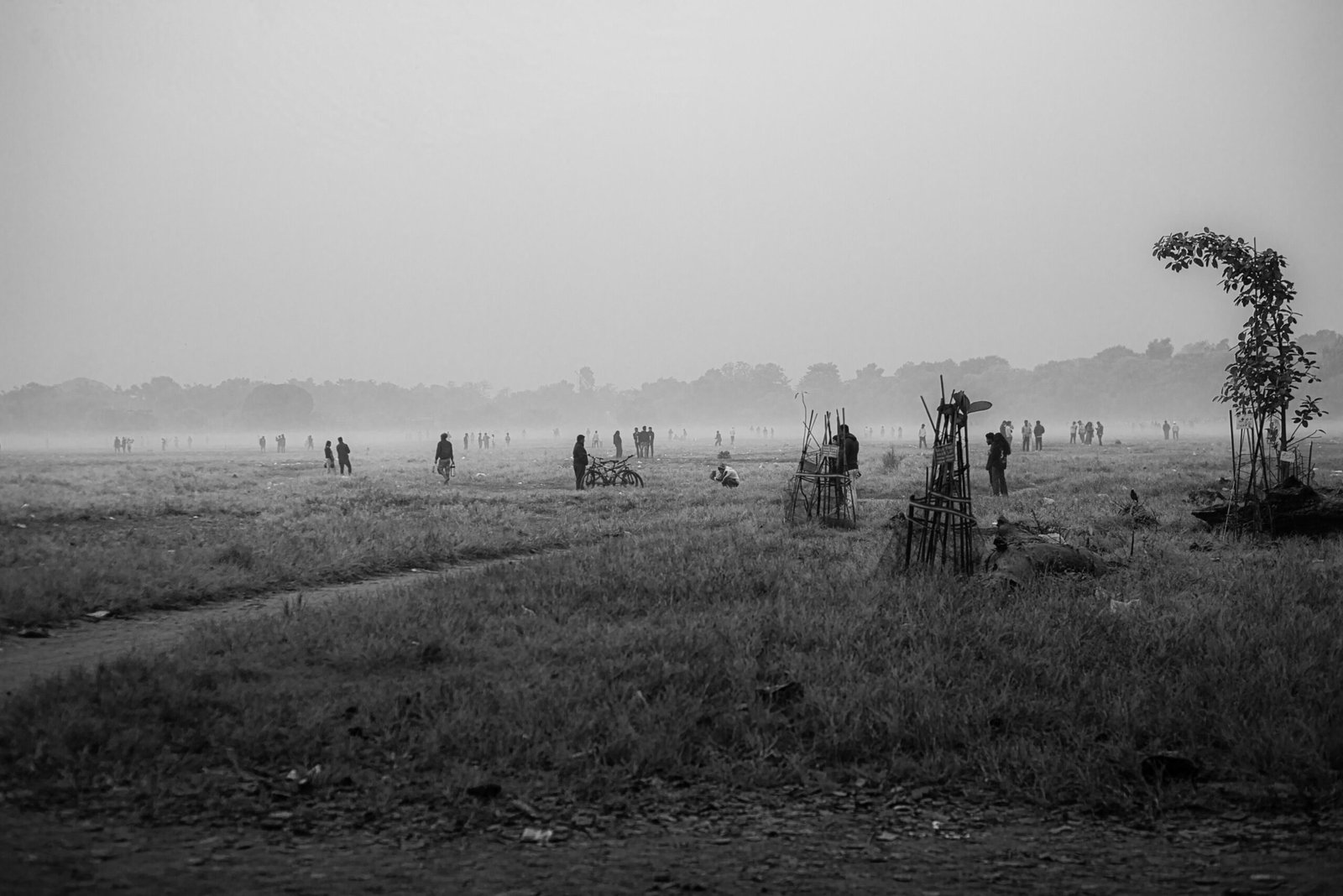
Photo by Avro Dutta
I, like other viewers in movie theatres, was completely amazed the first time I watched the film «The Purge.» A powerful narrative drive defined it: a new form of horror expression, a fresh set of terrors for the new millennium, and an incredible plot twist that changed the history of the home-invasion subgenre. Others, of course, focused on poor acting and strange scripts. Today, I do not wish to dwell on the film’s aesthetic value.
Other features made the film even more interesting than its innovative construction and cinematic value. At that time, I was a young spectator of 25. I was discovering a vital visual document that challenged conventional wisdom regarding social reality –and everything social scientists claimed at the time.
I had listened to hundreds of experts and read countless texts claiming that, in the 21st century, class was no longer the primary factor of analysis. With few exceptions –such as Ulrich Beck, Charles Tilly, and Alain Touraine– contemporary sociology abandoned class analysis as a relic of the past. We had resided within Francis Fukuyama’s pro-capitalist fantasies, while neo-liberal economics conquered the entire world starting in the 1990s. Currently, we are witnessing a new wave of films addressing social class, with «Parasite» being the most outstanding example.
Nevertheless, key statistics such as the Gini coefficient or eviction rates told a completely different story. In fact, structural policies drove the global economy toward critical levels of inequality –the major real estate bubble had burst only a few years earlier. Was it not surprising, then, that a film could represent the complex American society better than thousands of sociological assessments? Was critical theory not failing? How could experts fail to see the rise of the far right within that, even when the film portrays it so accurately?
Actually, it appears that a film, a novel, or a television series could describe reality more effectively than many scientific discourses –at least in specific contexts. Cultural studies, anthropology, and other social fields confirm this idea: a cultural artefact can be useful for describing the present as well as warning us of the risks of the future. But it is not about making predictions. It is about understanding the complex set of factors that drive our society in one direction or another.
In those terms, Kafkaesque, Orwellian, or Huxleyan books were not able to anticipate the social changes that were about to occur; yet, they did provide a better understanding of the human emotions and social engines that pushed the European world toward fascism. In other words, everything we are talking about in these lines refers to the emotional mechanisms of society that can be explained through cultural artefacts, but which remain understandable to scientists. This is particularly true for those scientists who ideologically refused to acknowledge the importance of racism and class status in late capitalism.
Of course, a futuristic film cannot accurately predict the technology of the future and similar elements, but in terms of politics, it can be very useful in explaining the main trends in a society. That is what we see in «The Purge,» a society that has fallen into a regime that controls all systematic violence; an entire political economy of violence has been established.
A film, a novel, or a television series could describe reality more effectively than many scientific discourses –at least in specific contexts.
At the same time, in our real world, the press systematically denied growing social differences. While its experts were concerned with concentrating forces in support of the military apparatus, societies saw an acute radicalization of right-wing forces. The result was that we were able to watch a film that explains the organization of far-right violence, while theory and the media focused on other issues.
In James DeMonaco’s dystopia, a new political party has emerged with the proposal to refound the nation: the New Founding Fathers of America (NFFA). The mechanism: 12 hours of unlimited violence –class-based and racist violence, indeed. In other words, all ordinary crimes are permitted, except those against high-ranking political authorities. The result is social engineering that instigates class hatred against the poor and racial hatred oriented toward marginalized people. One night a year of proto-fascist unrestraint maintains latent violence the remaining 364 days. The strange thing is that canalization actually works in this fictional world, reducing rates of violence and crime. This provided legitimacy to the new regime: a new regime that built its own religion founded on hate and violence.
Thus, the NFFA conceived a new society based on an anthropology consistent with a supposedly violent human nature, featuring its own cults, culture, and civility. Unleashing these violent forces allows the party to concentrate private, public, and paramilitary violence against the poor. Throughout the five films, we see numerous examples of this neo-liberal bio/thanatopolitics.
Now, I will examine three types of racial and social mechanisms in this dystopian neo-liberal world that are crucial for understanding our present: the normalization of human sacrifice by the middle and upper classes against marginalized people; the creation of right-wing militant militias and the involvement of private armies, which drive the purge toward systematic political decisions (urban planning, elimination of the opposition, etc.); and a new anthropology that legitimized this system.
Dehumanization of poor people
In the first movie, one of the simplest devices used to show social differences was the contrast between an apparent homeless man fleeing for his life amid the large, fortified houses of the middle class. Contrary to the regime’s rhetoric, violence does not make citizens equal. There is no such thing as equal violence for all, because in a class-based society there are different resources for violence and safety. There are countless conversations about this in each of the movies.
So, on that particular night, not everyone waits under the same conditions. There are many people who can only be frightened during those 12 hours, while others can remain safe in their fortified homes. That includes high-ranking officials and the upper and middle classes. That is an important factor from the filmmaker’s point of view, and it is obvious when the film sets the stage for the action to begin with an act of pure empathy: a young boy who opens a door to save a life.
Here, the film seems to suggest that a secret pact –a class pact– was broken at the very moment a Black, homeless person was saved. Without that act, no further action would have been possible. Even the paramilitary group leader –a group of adolescents– was very explicit in his statements: they wanted to kill only the homeless person, not the middle-class family. The third act is much more specific in this regard, with a stage full of middle-class neighbours about to sacrifice the main characters. Certainly, DeMonaco’s movies are not euphemistic. This trope is quite common in the saga; at some point, all these movies present a scenario of ritualized class violence, oriented toward killing people who are racialized and poor.
Another interesting aspect of this film, which relates to the middle class’s relationship with violence, is the normalization of the Purge system. In general, there is still a certain atmosphere of passivity and acceptance regarding the institutionalization of this day in all classes, although some individuals –mostly from the upper and middle classes– are more active in their defence of the right to purge. Any potential dissent is limited to the individual or passive sphere.
This cult of violence and the way society has normalized it constitute the most powerful critique of DeMonaco’s film. The fact is, it seems quite obvious that the premise is rather exaggerated to be possible in our world, but are the right-wing militias that have been developing since the 1990s and now constitute the driving force behind a new far-right government not actually real? Did this interpretation of the spread of far-right violence not anticipate a new political moment that had remained hidden within the consensus of traditional American political parties? Is the American gun cult not equally strange and real?
Relationship between right-wing militias and organized armed groups
DeMonaco’s film series does not simply present a series of individual acts of violence. One of its most outstanding narrative strengths is the description of the organization of violence and how that organization contributes to the spread of an organized system of death. It is true that every film presents different groups of armed people taking up arms and going out to steal, rape and kill. But, amid all this disorganization and this tendency toward anarchy, there are well-planned and structured militias that pursue their own objectives.
One of its most outstanding narrative strengths is the description of the organization of violence and how that organization contributes to the spread of an organized system of death.
Even if we see gangs of teenagers patrolling the streets, the plot usually works from the sudden appearance of large militias or military forces with specific interests: urban renewal plans, the assassination of a high-ranking politician, or the strengthening of the ruling party.
These groups are made up of former soldiers and former government officials, and they are funded by companies or the government itself. They act as their armed wing. And that is a very powerful statement by the film-maker about how the armed politics of our time might work. It seems to outline a scheme of how hatred works in our own world as a machine of political or economic profit. Because it is true that there are indeed urban renewal and gentrification plans in our cities, and it is true that racial hatred does indeed exist in our lives; it is true that there is, in fact, a desire to kill homeless people.
Thus, each film draws a scheme of how our unequal world hinges on different forms of violence, militarization and crime. Crime, in its individual or collective form, is important because it can legitimize the whole system of the «New Founding Fathers of America»; even sociopathic conduct is meaningful in order to justify a false violent anthropology that sustains this new political order.
All these levels of violence analysis present a relevant artefact or device that serves to describe how our ordinary world works and how this could involve the far-from-spontaneous organization of armed groups and even militias. In fact, our present is plagued by far-right militias, gangs that offer eviction services targeting the poor, and even individuals who act as «avengers» in mass shootings.
A false violent anthropology
The entire power of the NFFA is based on the supposed violent nature of human beings. Nonetheless, each film presents the victim’s point of view and strives to make the audience empathize with the protagonists as they flee. In general, these are the victims of this night, and they refuse –under various pretexts– to take part in the carnage. Consequently, the cornerstone of this policy is false: there is no such thing as a violent human nature of the kind proposed by the NFFA.
And that is particularly clear in the events presented in the prequel, «The First Purge.» In this film, the new political party’s strategy is based on a «social science experiment» involving antisocial elements and sociopathic individuals in a session of unleashed, unrestrained violence. Amid the experiment, it was clear that the data does not support their thesis. In contrast, it became necessary to falsify the information collected following the arrival of paramilitary groups.
And that is the film’s core premise. Even at the beginning of this experiment, many people oppose the very idea of praying to unleash violence. That is clear to the activists; it is also clear to the criminals (who are naively turned into anti-heroes in the movie); and it is clear to the main scientist at the end of the film. The very existence of open opposition to this experiment seems to demonstrate the fragility of the regime’s violent anthropology.
In this film, as in the others in the franchise, the filmic device insists on the importance of a collective and popular sense of life. Although the stage lacks complexity and relies on a certain naivety, it is important to remember a simple premise that drives all these films: there is no violent nature within us; that kind of idea must be implanted from the top down.
At the end of this essay, we can highlight three aspects of our problematic present. First, we must fight against the modern culture of sacrifice that is spreading among the middle classes, especially against poor and racialized people. This forms the basis of contemporary violence that is poisoning our societies. Second, it is imperative to map the internal mechanisms of organized violence that currently sustain hidden interests which shape our neighbourhoods and cities. Last but not least, we should not forget, in the midst of a selfish and violent world, that our greatest strength is solidarity and that there is no human nature that stands above it.
* Si prefieres leer la versión traducida al castellano, haz click aquí.